


Understanding the Ripple Effect of Suicide in the Workplace
The impact of a suicide rarely sits neatly in one place. Within a workplace, it can reach colleagues who knew the person well, those who barely knew them, managers trying to support others, and the wider organisation.
There is no simple hierarchy of grief or impact. How someone is affected will depend on their relationship with the person, their own experiences of loss and suicide, what they witnessed or heard, and the support available to them.
Recognising these different ripples can help organisations avoid assumptions and respond more thoughtfully to people who may be affected by a suicide at work.
Who can be affected by a suicide in the workplace?
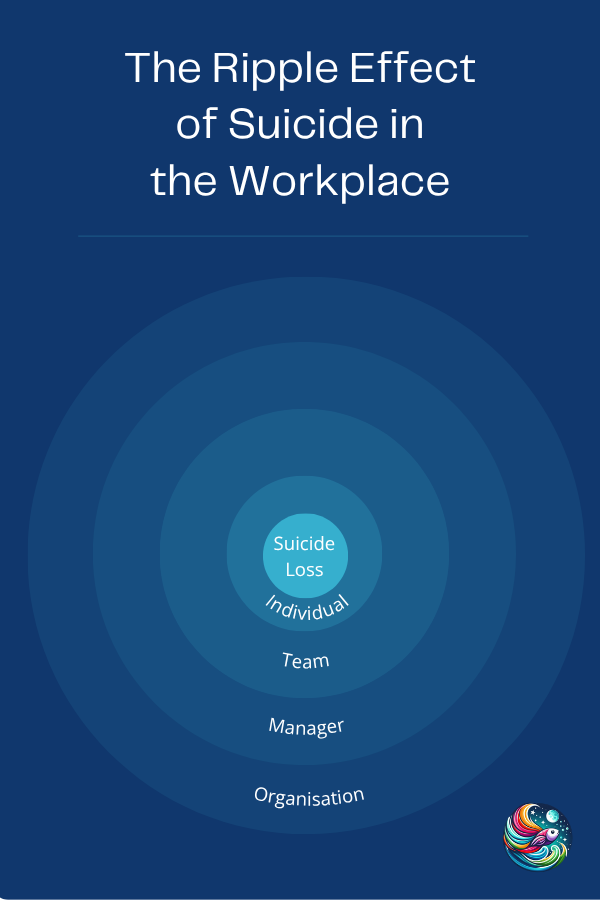
The Individual
Every person’s response to suicide loss is different. Reactions may include profound grief, shock, guilt, anxiety, anger, numbness or unanswered questions, and these experiences can overlap or change over time. Previous experiences of suicide or other losses may also shape how someone responds.
Someone does not need to have been particularly close to the person who died to be deeply affected.
The Team
A suicide can change the dynamics of a team. Relationships, routines, workloads and morale may all be affected, while colleagues can also feel uncertain about what to say or how to support one another.
Creating space for honest conversation, while respecting that people will respond differently, can help teams navigate what follows.
The Manager
Managers can find themselves carrying two experiences at once. They may be personally affected by the death while also being expected to communicate with and support their team.
Clear organisational guidance and access to support can help managers respond with greater confidence without expecting them to have all the answers.
The Organisation
The impact can extend across the wider workplace, affecting communication, trust, psychological safety and organisational culture.
How an organisation responds in the immediate aftermath, and in the weeks and months that follow, can influence how supported people feel and how confidently the workplace navigates the loss.
The impact of a suicide can ripple across a workplace.
Understanding those ripples helps organisations respond with compassion, confidence and coordination at every level.
What does the ripple effect of suicide mean in practice?
Understanding the ripple effect means looking beyond who was closest to the person who died and considering how the impact may be felt across the workplace.
In practice, this means making support visible and accessible, giving managers clear guidance, communicating sensitively and checking in over time rather than concentrating support only in the immediate aftermath.
The aim is not to predict exactly who will be affected, but to create a workplace response that allows people to access the right support when they need it.
Continue exploring workplace postvention
Explore The Ripple Effect Training →
Take this understanding into a practical workplace context. The Ripple Effect training helps managers and organisations explore how suicide may affect people differently, how to communicate with greater confidence and what appropriate support can look like over time.
← Back to the Workplace Suicide Postvention Guide
Return to the main guide and explore other aspects of workplace postvention.