


The Ripple Effect: Managing the Impact of Suicide in the Workplace

Course Overview
The Ripple Effect: Managing the Impact of Suicide in the Workplace is available as either a 60-minute Awareness Session or a 90-minute Interactive Workshop.
This trauma-informed course is designed to help organisations understand and respond thoughtfully when suicide affects the workplace.
The course focuses on postvention, the support and response that happens after a suicide. It explores how the impact of suicide can ripple beyond those closest to the person who died, affecting colleagues, managers, wider teams, clients, service users and others connected to the workplace.
A workplace may be affected by suicide in many different ways. This may include:
the death of a colleague
a staff member being bereaved by suicide
suicide affecting clients, service users or the people staff support
the wider impact of a suicide within a team, organisation or community
Rather than focusing on suicide prevention strategies, warning signs or risk assessment, this course explores what happens after a suicide and how workplaces can respond with compassion, clarity and appropriate boundaries.
Participants consider both the immediate response and the days, weeks and months that follow, including communication, support, the varied ways people may be affected and what can help reduce further harm.
Duration:
60-minute Awareness Session
90-minute Interactive Workshop, including additional discussion, workplace scenarios and Q&A
Delivery: Live facilitated delivery, available in person or online. Hybrid delivery may also be available depending on the organisation and setting.
Audience: Whole staff teams, including managers, team leaders and people in client-facing roles
What participants will explore
Participants will explore:
The ripple effect of suicide and why its impact can extend beyond those closest to the person who died
How people may be affected differently depending on their relationship to the person who died, their role and their own experiences
How grief and trauma can show up at work in varied and sometimes delayed ways
Common workplace challenges following a suicide, including silence, uncertainty and fear of saying the wrong thing
What can help in the immediate response and in the days, weeks and months that follow
What can unintentionally cause further harm, including over-intervention or doing too much too soon
The importance of language, boundaries and psychologically safe communication
How people may reintegrate into work and everyday life over time
When and how to signpost to further support appropriately
Prevention and postvention: what is the difference?
Suicide prevention focuses on reducing the risk of suicide and helping people before a suicide occurs.
Postvention is what happens after a suicide. It includes the support, communication and organisational response that follows, recognising that the impact may extend beyond those closest to the person who died.
Good postvention can also form part of suicide prevention. Responding thoughtfully after a suicide can help reduce isolation, distress and the risk of further harm.
This course focuses specifically on workplace postvention. It does not provide suicide risk assessment, crisis intervention or clinical training. Instead, it helps workplaces understand the wider impact of suicide and respond with compassion, appropriate communication, clear boundaries and practical support.
If you are new to postvention, you can find more information about what it means, why it matters in the workplace and what organisations should consider following a suicide on our Workplace Suicide Postvention page.
Approach and tone
This session is designed to approach a sensitive subject with care while remaining practical and relevant to the workplace.
The session is:
Trauma-informed and psychologically safe
Grounded in lived experience and professional practice
Practical and workplace focused
Facilitated in a way that supports reflection without placing pressure on participants to share personal experiences
Participation is encouraged where appropriate, but always optional. Participants can step away from the session at any time if needed.
Common concerns explored
People attending the session may feel:
Unsure how to approach someone affected by suicide
Worried about saying the wrong thing or overstepping boundaries
Uncertain why people can respond so differently following a suicide
Unsure what appropriate support looks like in a workplace setting
The course provides space to explore these concerns and develop greater clarity and confidence about how to respond.
Guidance and evidence
This course is informed by BS 30480:2025 Suicide and the Workplace – Intervention, Prevention and Support, alongside recognised postvention guidance and trauma-informed principles.
BS 30480 provides organisations with guidance for planning, responding and supporting people when suicide affects the workplace, including compassionate communication and support following a suicide.
After this session, participants should be better able to:
Understand what workplace postvention is and how it differs from suicide prevention and intervention
Recognise the wider ripple effect of suicide, including how people may be affected differently and at different times
Respond more confidently and compassionately when suicide affects a colleague, team or workplace
Use thoughtful and appropriate language when communicating about suicide and supporting those affected
Recognise what can help and what may unintentionally cause further distress
Maintain appropriate workplace boundaries and understand when further support or signposting may be needed
What participants have said…
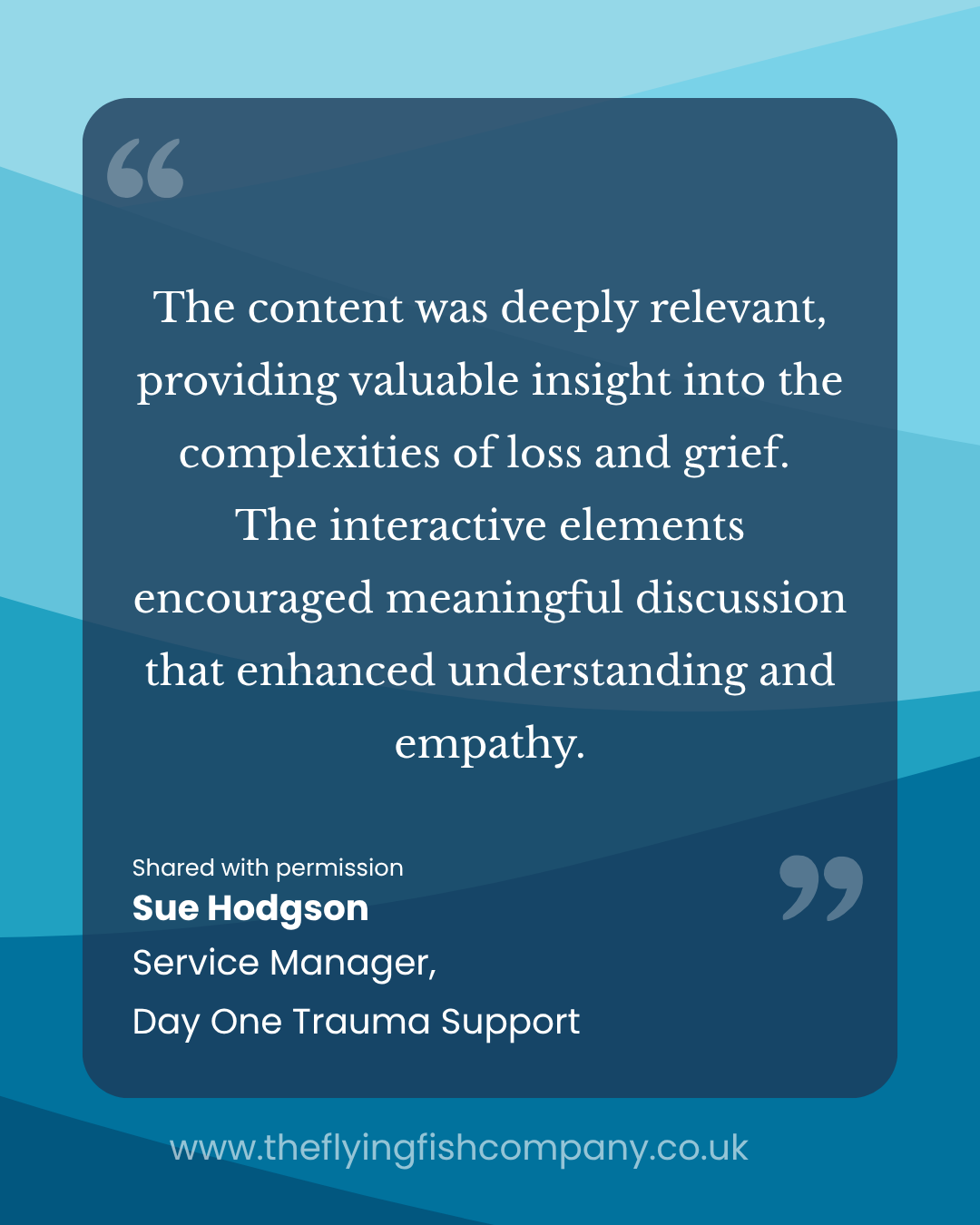
Feedback following combined workplace grief awareness and suicide postvention training.
Read more feedback from organisations and participants on our Testimonials page.

Interested in bringing The Ripple Effect to your organisation?
If suicide has affected your workplace, or you want to prepare your organisation to respond more thoughtfully if it does, The Ripple Effect can be tailored to your team, setting and level of experience.
The session is available as a 60-minute Awareness Session or a 90-minute Interactive Workshop, delivered live in person or online.
If you are unsure which option would be most appropriate, you do not need to decide before getting in touch. Use the form below to tell me a little about your organisation and what you are looking for.
Enquire about The Ripple Effect
Privacy: The information you provide will be used to respond to your enquiry and handled in accordance with our Privacy Policy.
Please note: The Ripple Effect is a workplace suicide postvention course. It focuses on how organisations can respond and support people after a suicide. It does not teach suicide intervention, crisis response or clinical risk assessment.
See all training options
Explore our Workplace Grief Awareness Training Series to compare courses for different roles, teams and workplace needs.
Looking for manager-focused support?
Explore Supportive Leadership: Navigating Grief in the Workplace for managers and team leaders supporting bereaved employees.
Looking for guidance rather than training?
Visit our Workplace Suicide Postvention page for practical information about postvention, the ripple effect of suicide and our free Workplace Postvention Checklist.