


Suicide Postvention in the Workplace
What is Postvention?
Postvention refers to the support, communication and practical actions that take place after a suicide to support those affected.
As people spend a significant part of their lives at work, the impact of suicide is often felt well beyond family and friends.
A compassionate response after suicide can help reduce uncertainty, support grieving colleagues and strengthen psychological safety.
In a workplace setting, this may include:
✓ Supporting colleagues
✓ Supporting managers
✓ Communicating sensitively and clearly
✓ Supporting those bereaved by suicide
✓ Returning to work after bereavement
✓ Strengthening psychological safety
While suicide prevention focuses on reducing the risk of suicide before a crisis occurs, postvention focuses on responding compassionately and effectively after a suicide has happened.
Although no organisation can remove the pain of loss, being prepared can help people feel supported, informed and less alone during an incredibly difficult time.
Why Does Postvention Matter in the Workplace?
Most organisations have procedures for physical health and safety incidents, yet many have never considered how they would respond if a suicide affected their workforce.
The publication of BS 30480, the first British Standard for Suicide Prevention in the Workplace, reflects a growing recognition that suicide is not solely a healthcare issue. Workplaces also have an important role to play in prevention, intervention and postvention.
The standard highlights that almost every workplace is likely to be affected by suicide in some way, whether through supporting someone experiencing suicidal thoughts, responding to a suicide death, or supporting those bereaved by suicide.
Importantly, the standard recognises that postvention is not solely an HR responsibility. Creating a compassionate and coordinated response requires collaboration across leadership teams, managers, HR, Occupational Health, wellbeing services and colleagues throughout the organisation.
No organisation can prevent every tragedy, but every organisation can prepare to respond with compassion, confidence and practical support when people need it most.
Understanding the Ripple Effect
The impact of suicide in the workplace rarely stops with one individual. Understanding the ripple effect helps organisations recognise who may be affected and how compassionate, coordinated support can make a difference at every level.
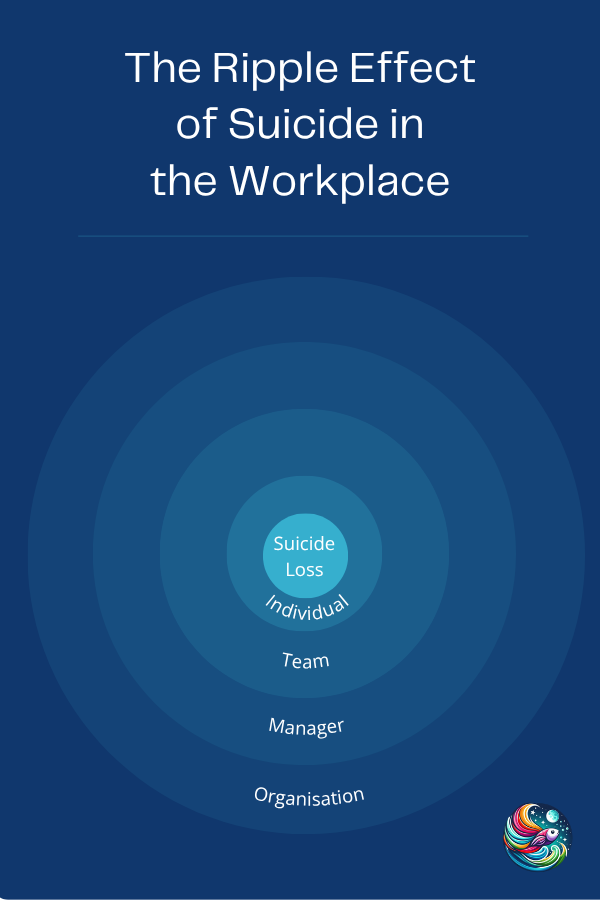
The Individual
Every person's response to suicide loss is different. Some people experience profound grief, while others struggle with shock, guilt, anxiety or unanswered questions. Compassionate communication, flexibility and practical support can help people feel less alone while they begin to adjust.
The Team
The death of a colleague can affect relationships, communication, confidence and team morale. Established routines may change, workloads may shift and colleagues may feel uncertain about how best to support one another. Creating opportunities for open, honest conversations helps teams begin to recover together.
The Manager
Managers are often expected to support others while continuing to lead their teams. Many worry about saying the wrong thing or not knowing how best to respond. Practical guidance, compassionate leadership and clear communication help managers respond with confidence rather than feeling they need to have all the answers.
The Organisation
A suicide can affect organisational culture, psychological safety, trust and employee wellbeing. How an organisation communicates and responds in the days, weeks and months that follow can shape recovery across the workplace. A compassionate, coordinated postvention response helps strengthen trust, support recovery and remind people that nobody has to navigate loss alone.
Every suicide creates ripples
Understanding those ripples helps organisations respond with compassion, confidence and coordination at every level.