

Suicide Postvention in the Workplace
What is Postvention?
Postvention refers to the support, communication and practical actions that take place after a suicide to support those affected.
A compassionate response after suicide can help reduce uncertainty, support grieving colleagues and strengthen psychological safety.
In a workplace setting, this may include:
✓ Supporting colleagues
✓ Supporting managers
✓ Communicating sensitively and clearly
✓ Supporting those bereaved by suicide
✓ Returning to work after bereavement
✓ Strengthening psychological safety
While suicide prevention focuses on reducing the risk of suicide before a crisis occurs, postvention focuses on responding compassionately and effectively after a suicide has happened.
A thoughtful postvention response can help reduce uncertainty, support grieving colleagues, strengthen psychological safety and minimise the risk of further harm.
Although no organisation can remove the pain of loss, being prepared can help people feel supported, informed and less alone during an incredibly difficult time.
Why Does Postvention Matter in the Workplace?
Most organisations have procedures for physical health and safety incidents, yet many have never considered how they would respond if a suicide affected their workforce.
The publication of BS 30480, the British Standard for Suicide Prevention in the Workplace, reflects a growing recognition that suicide is not solely a healthcare issue. Workplaces also have an important role to play in prevention, intervention and postvention.
The standard highlights that almost every workplace is likely to be affected by suicide in some way, whether through supporting someone experiencing suicidal thoughts, responding to a suicide death, or supporting those bereaved by suicide.
Importantly, the standard recognises that postvention is not solely an HR responsibility. Creating a supportive response requires collaboration across leadership teams, managers, HR, Occupational Health, wellbeing services and colleagues throughout the organisation.
A compassionate and coordinated response can help reduce uncertainty, support those affected and strengthen psychological safety during an incredibly difficult time.
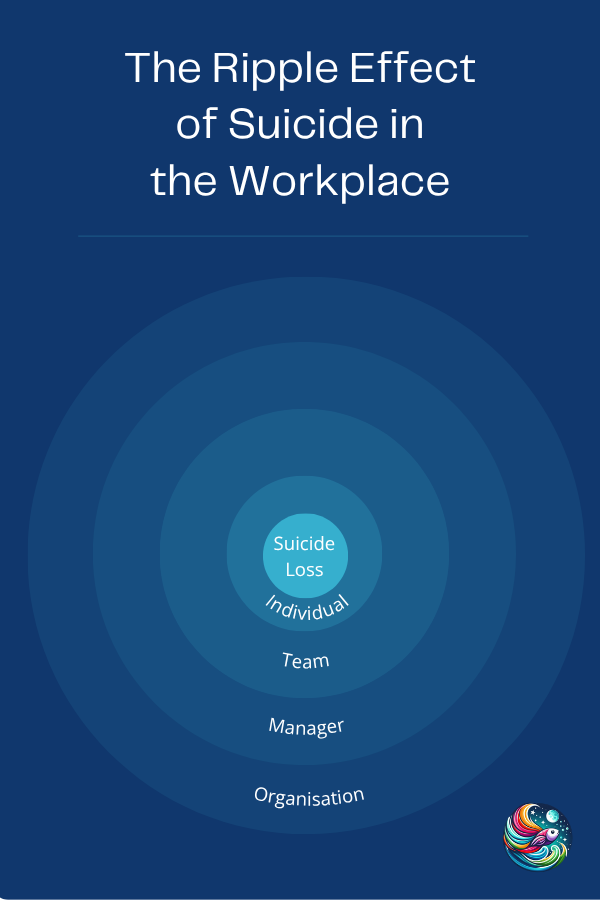
The Ripple Effect of Suicide in the Workplace
When a suicide affects a workplace, the impact rarely stops with one individual.
Colleagues may be grieving the loss of a friend, teammate or manager. Others may be struggling to process the suddenness of what has happened. Some may question whether there were signs they missed, while others may feel uncertain about what to say or how to support those around them.
People can experience a wide range of emotional and practical responses, including shock, sadness, anger, guilt, confusion, anxiety, difficulty concentrating or changes in confidence at work. There is no single or "right" way to respond.
The impact can extend beyond those who knew the person well. Teams, managers, clients, customers, contractors and wider workplace communities may all be affected in different ways.
The Ripple Effect
The Individual
Every person's relationship with the deceased and their response to the loss will be unique.
The Team
Teams may experience changes in morale, communication, productivity and confidence as they adjust to the loss.
The Manager
Managers are often expected to support others while managing their own emotions, concerns and responsibilities.
The Organisation
A suicide can affect workplace culture, psychological safety and employees' sense of trust, stability and belonging.
Recognising the ripple effect of suicide helps organisations respond with compassion, understanding and appropriate support for those affected.
A thoughtful postvention response acknowledges that while people experience loss differently, nobody should have to navigate it alone.